Objective
Transitioning from a rigid, legacy CMS-based system to a modern, microservices-driven "Many-to-Many" engine to power a global network of B2B storefronts.
Context & Opportunity
I joined B-Stock post-Series B to lead the transition from a siloed, manual site-provisioning model to a modern, multi-tenant ecosystem. The primary challenge was a legacy Magento infrastructure that required individual instances for every seller, making global updates impossible and creating legal hurdles regarding our status as a "true marketplace." My role was to architect the design vision required to build a scalable engine from the ground up.
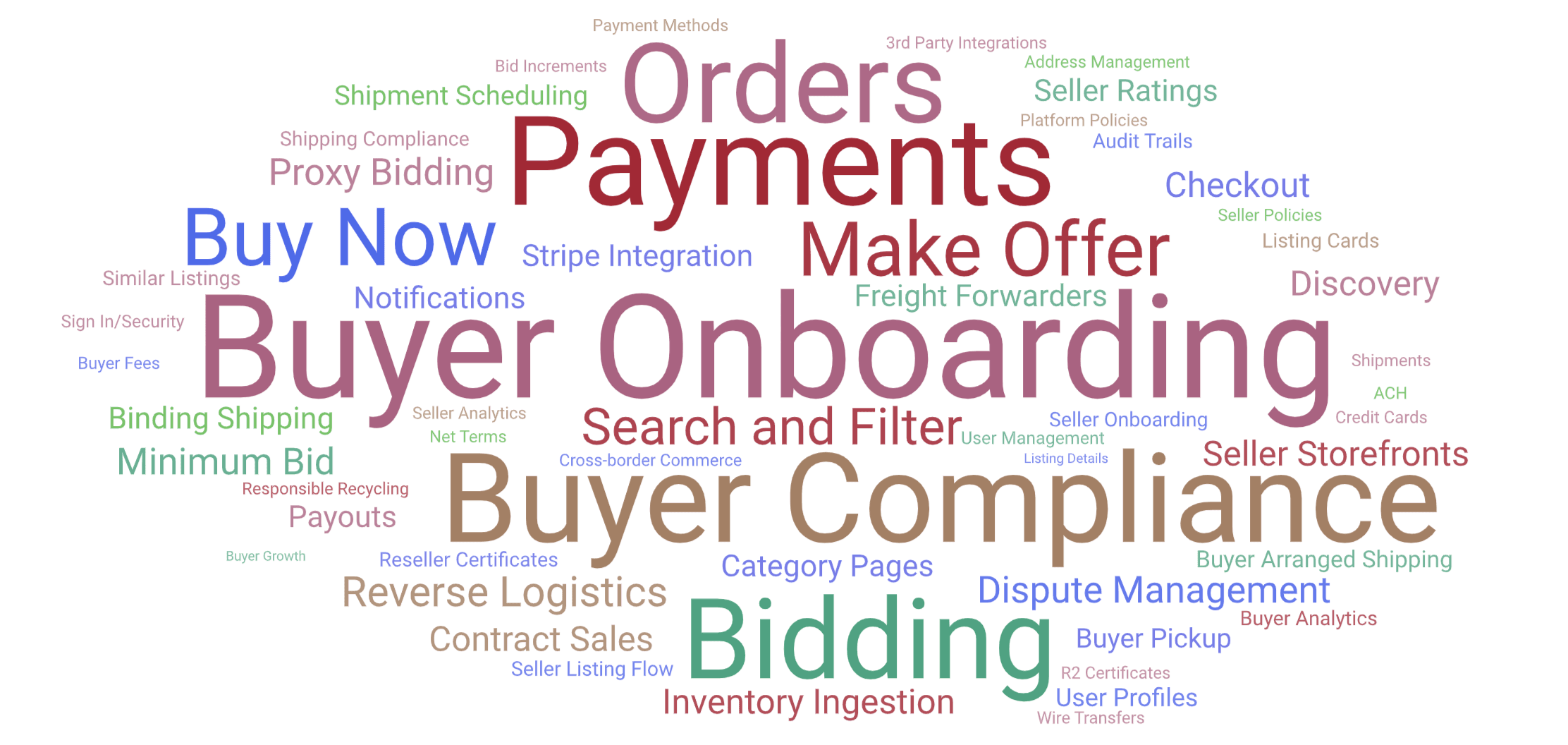
The "Many-to-Many Marketplace" (3MP) Vision: Why We Built It
To move the organization away from legacy tech debt, I championed a vision focused on three pillars:
Business & Legal Scalability: shifting to a true marketplace model to satisfy legal requirements while leveraging network effects to lower buyer acquisition costs.
Technical Modernization: moving to a microservices architecture with robust APIs to allow for the automation of internal B-Stock processes and rapid product scaling.
User Experience Excellence: creating an ecosystem where buyers could easily discover sellers and categories across the entire network, rather than being locked into siloed storefronts.
Establishing Strategic Foundations & Organizational Alignment
I focused on building the human and structural infrastructure required to support the vision:
Defining an Evidence-Based Roadmap: Utilized early buyer interviews to define the initial product scope and prioritize high-impact retention features.
Orchestrating Strategic Team Growth: Grew the design organization from 1 to 8. To accelerate the migration while maintaining long-term budget health, I used a mix of full-time hires, contractors, and interns, allowing the team to scale up for peak execution and scale back efficiently post-launch.
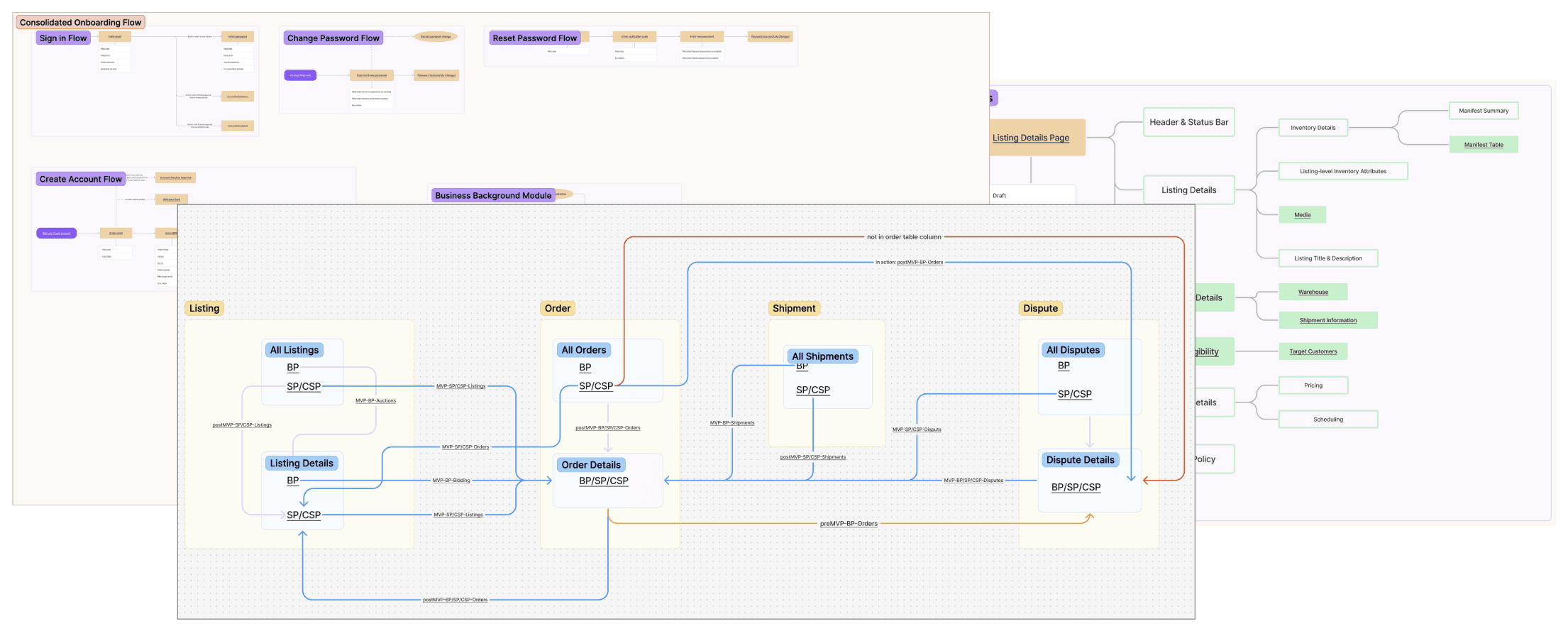
Designing a Unified Ecosystem: Architected the structural framework for a multi-portal platform, ensuring seamless integration between Buyer-facing interfaces, Seller tools, and internal Operations portals like the Customer Support Portal.
Driving Organizational Consensus: Navigated the diverse needs of Sales, Account Management, and Customer Support while maintaining strategic alignment with Executive leadership.
Executing the Platform Design and Lifecycle
I led the tactical execution and managed the "messy middle" of the multi-year build:
Adapting Design Strategy for Migration: Updated the approach to support a hybrid migration model, ensuring a cohesive experience for users even as features transitioned incrementally.
Orchestrating Cross-Portal Workflows: Led the design of high-stakes logic flows—such as automated compliance (RCID/R2) and freight logistics—that required synchronized actions and data transparency across Seller, Buyer, and Admin environments.
Implementing Continuous Multi-Sided Validation: Established iterative research cycles to ensure that as features were built, they remained grounded in the real-world behavior of all marketplace participants.
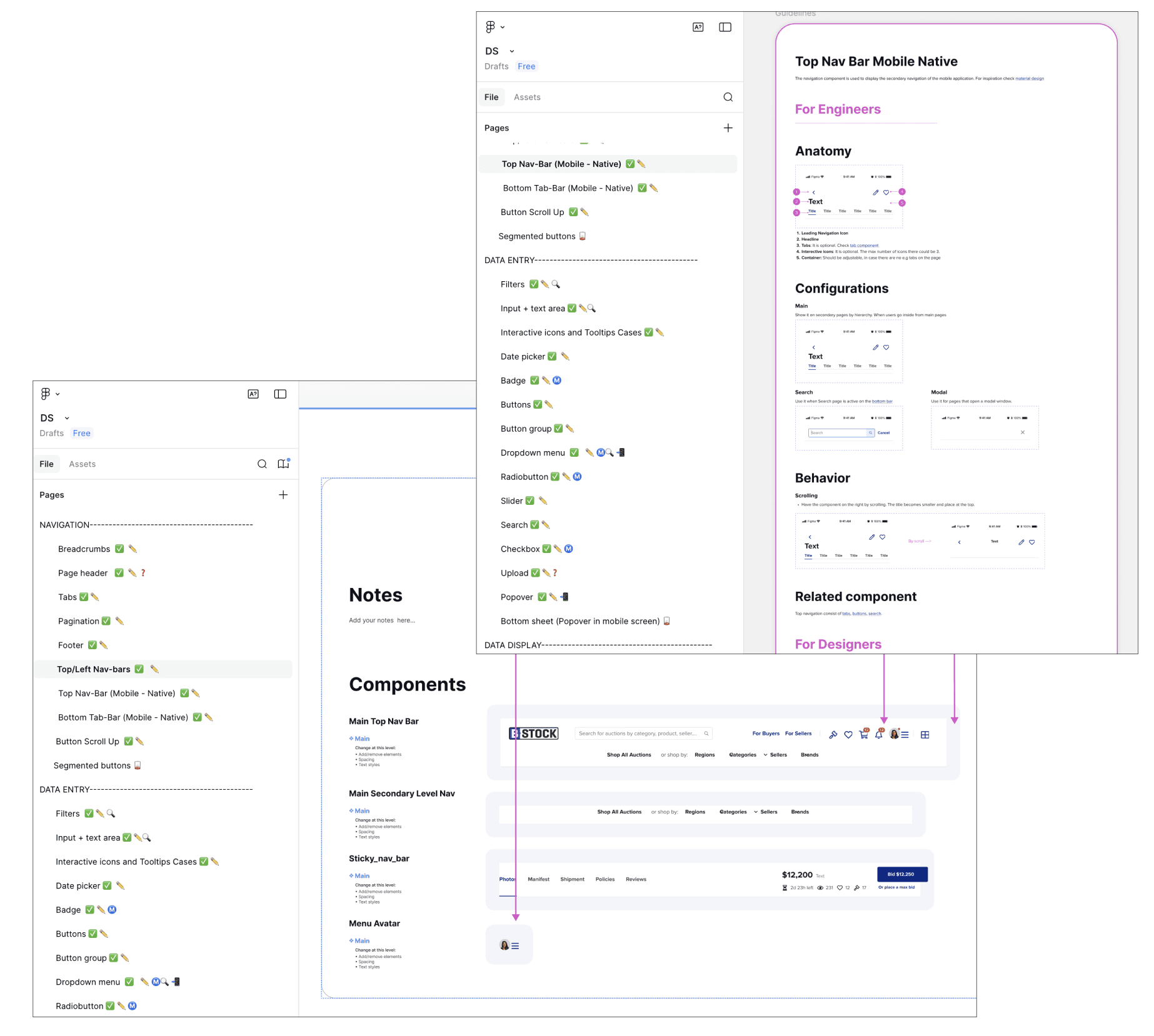
Governing Design Systems: Established the centralized Design System and bridged the migration to a modern React stack, turning technical skepticism into a collaborative, phased roadmap.
Measuring Strategic Impact
The transition to the new Many to Many Marketplace (3MP) engine drove measurable growth across the entire business:
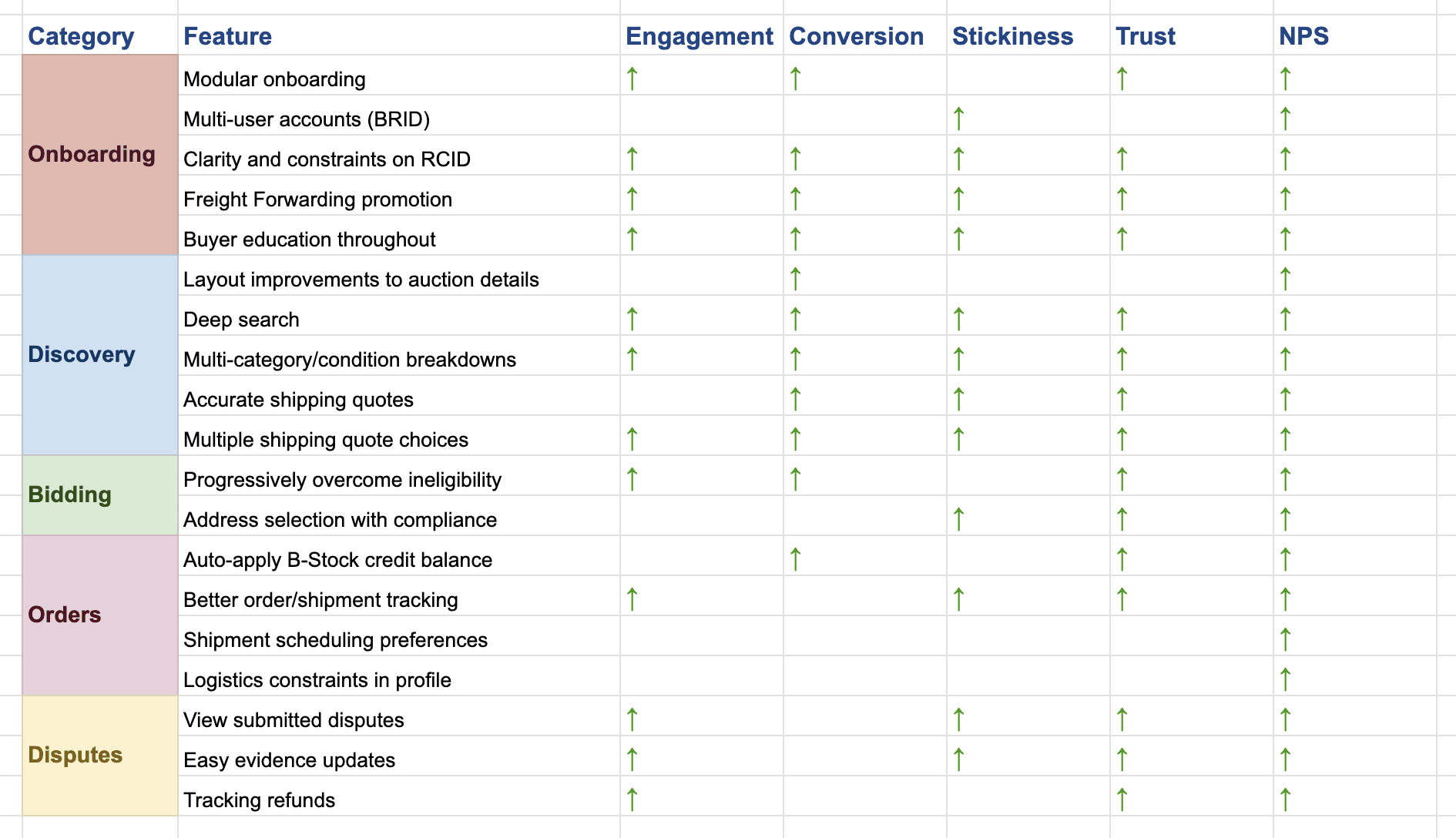
Marketplace Discovery: Layout and search improvements drove significant increases in buyer engagement and conversion.
Ecosystem Trust: Modularized onboarding and transparent logistics/compliance flows led to a holistic lift in NPS.
Transactional Health: Optimized bidding logic and financial credit features improved conversion and stickiness.
Operational Efficiency: Re-engineering the disputes process and internal admin tools increased buyer retention and lowered support overhead.